
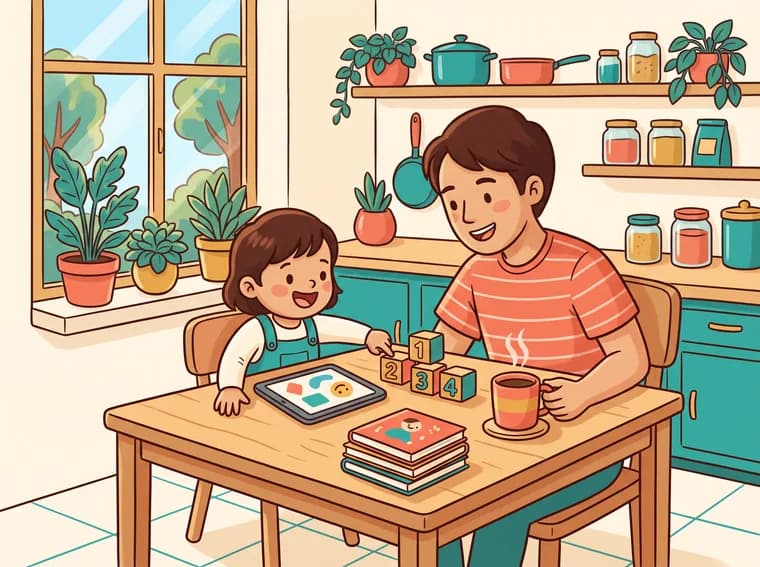
The simplest way to build a daily learning habit for kids is to keep it short and keep it the same: fifteen focused minutes at the same time every day. That is the whole of the 15 minute rule, and it beats a two-hour marathon on Sunday because consistency, not length, is what makes a habit stick. If you have been wondering how to build a study routine that survives past the first enthusiastic week, start smaller than you think — a winnable fifteen minutes your child actually looks forward to.
Here is the plain-language why. Habits form through repetition in a steady context, so when the same cue turns up at the same time each day, your child's brain starts to predict what comes next and queues it up almost automatically. The routine begins to run on rails instead of on willpower. A long, irregular session never gets that help, because the brain cannot build a pattern out of something that only happens when everyone happens to feel like it.
Attach your homework routine to a daily anchor
The fastest way to anchor a new homework routine is to stack it onto a habit you already have — a trick often called habit stacking. Pick something that happens every single day without fail: breakfast, the walk home, teeth before bed. Then glue the learning to the end of it. 'After we clear the breakfast plates, we do our fifteen minutes' works far better than 'sometime this afternoon', because the old habit becomes the reminder. You skip the daily 'should we?' negotiation that quietly kills most routines, and nobody has to keep remembering.
Make the anchor specific and visible. One family does it at the kitchen table while the kettle boils; another keeps it in the car for the ten quiet minutes after the school run, before anyone climbs out. The point is not where it happens — it is that the slot is the same shape every day, so it slowly stops being a decision and starts being just what you do.
Keep the 15 minutes winnable
The most common mistake parents make is pushing for more the moment things are going well. Your child is finally enjoying it, so you stretch fifteen minutes into forty — and the next day they drag their feet, because the thing that was easy to say yes to has quietly become a chore. Protect the short version. Fifteen minutes should end while there is still a little appetite left over, because that leftover wanting is exactly what pulls them back tomorrow. If even fifteen turns into a battle, shrink it to ten with no fuss at all. A learning habit children actually like is worth far more than a longer one they dread.
How to start the study routine tonight
You do not need a sticker chart or a reward jar. Tonight, do four small things. First, pick one daily anchor that never gets skipped. Second, name the slot out loud so it becomes real: 'After breakfast, we do our learning time.' Third, set a gentle fifteen-minute timer so the end is clear and nobody has to nag. Fourth, when the timer goes and your child still wants to carry on, stop anyway and say, 'Brilliant — we'll pick it up tomorrow.' That tiny cliffhanger is the hook. Whether the fifteen minutes is reading, a few sums, or a short session on something like KAVI, the format matters more than the subject: same time, same length, same cheerful ending, every day.
Give it a fortnight before you judge it. The first few days take reminding; somewhere around day ten you will notice your child drifting towards the table before you have said a word. That is the routine doing the heavy lifting — which was the whole idea.