
AI, for kids — the honest way
KAVI teaches children aged 5–12 to use AI as a tool to think with, not a machine to think for them. Three habits do most of the work: knowing AI is a confident guesser that can be wrong, checking its answers before trusting them, and being honest about when they used it — in Bahasa Indonesia and English, safe by design, from about Rp1,000 a day.
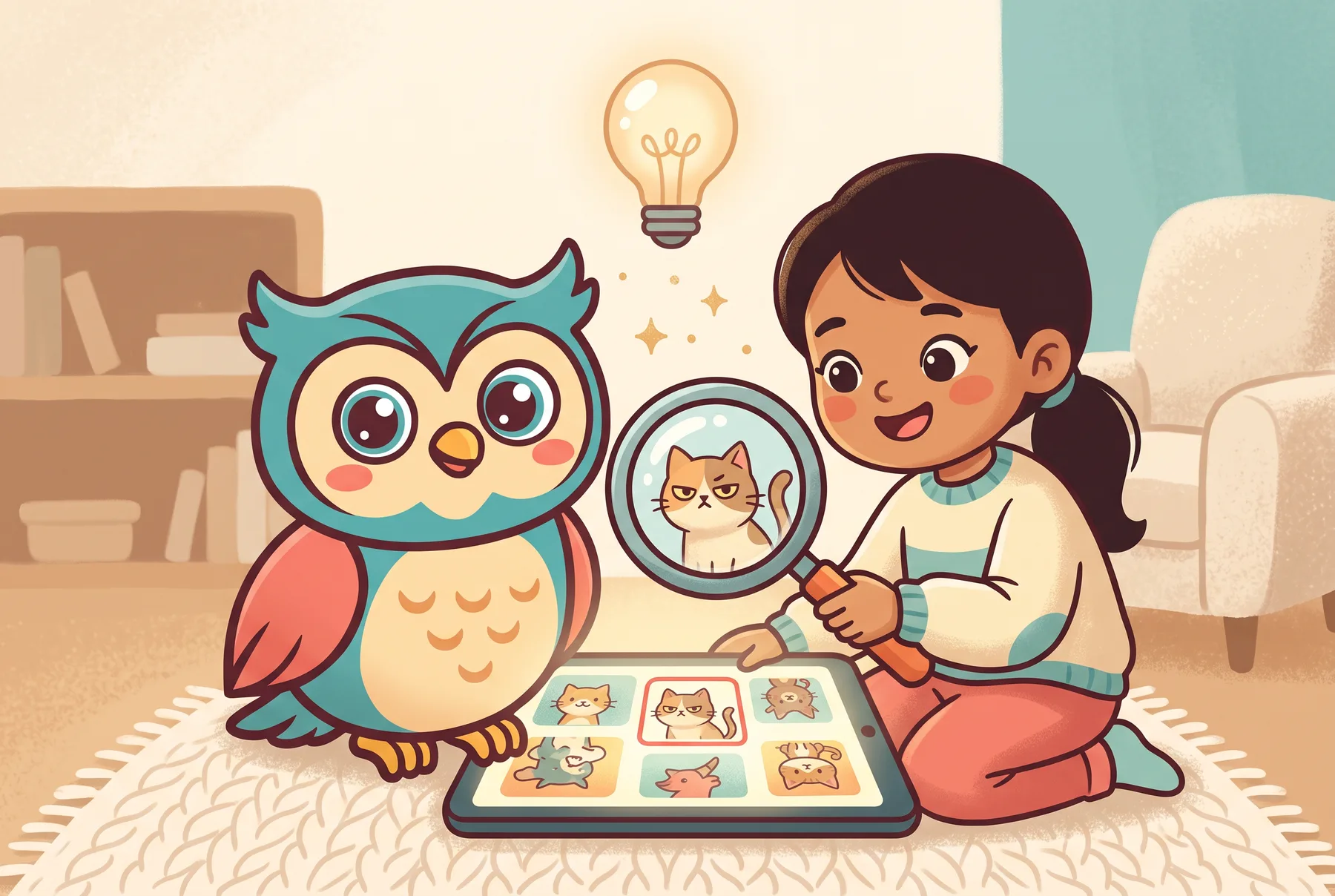
Four habits that make a child AI-literate

What AI actually is
A very good guesser that learned from huge piles of examples — often right, sometimes confidently wrong. No jargon, just a picture a child can hold.

How to check it
Telling the real from the AI-made, and the habit of asking “how would we check if this is true?” before believing an image or answer.

How to use it honestly
AI may explain, but you must understand. Treat it like a calculator: great for help, never a way to fake work you didn't do.

How it works, simply
Machine learning and LLMs in plain words — it predicts the next word from patterns, which is exactly why it can sound sure and still be wrong.
AI is in the national curriculum
Since the 2025/2026 school year, coding and artificial intelligence are part of Indonesia's curriculum under Kepmendikdasmen No. 127/2025 — computational thinking in PAUD, and visual coding tools around grades 5–6. The official window for introducing AI sits squarely inside KAVI's 5–12 band.
Built for children, not borrowed from adults
Under Indonesian law — UU PDP (No. 27/2022) and PP TUNAS (PP No. 17/2025) — a child-facing tool should be age-gated, transparent about data, and give parents control. A general adult chatbot meets none of these by default.
- ✓Age-gated and built for ages 5–12
- ✓No open-ended chat with strangers or the open web
- ✓No ads to kids · no child data sold
- ✓A human review gate on anything children can see
How AI makes the learning itself better

Fresh, affordable content
AI lets a small team author and refresh a lot of high-quality material — so the curriculum stays current and cheap, not frozen and expensive.

Practice that adapts
The next question meets your child where they are — easing off after a wobble, stretching them when they're flying.

Instant, kind feedback
Gentle feedback that explains the why behind a mistake and turns a wrong answer into the next hint — a conversation, not a test.
Where to go next
The complete parent's guide →
AI literacy for ages 5–12: what, why, safe, and how to build it at home.
The AI subject in the app →
The AI-literacy modules built across KAVI's S1–S6 ladder.
AI for maths →
How AI helps your child learn maths — a tutor that explains, not just answers.
AI for English →
Speaking practice without the fear, words in context, and instant feedback.
Talk to your child about AI →
Age-appropriate ways to explain it — without the scare.
Questions & safety →
Answers to the questions parents ask most.
Great education should be affordable — and AI is how
Quality learning used to come with a high price — private tutors, small classes, piles of workbooks. AI changes the maths: it lets us deliver genuinely high-quality, personalised teaching at a fraction of the old cost — so one low price covers all six subjects for up to 3 children, about Rp1,000 a day in Indonesia, with a 7-day free trial. If your child's learning isn't powered by AI yet, now is the time.
See pricingAI for kids, answered
What is AI literacy for children?
A child's ability to use AI as a tool to think with — not a machine to think for them. For ages 5–12 it is three habits: knowing AI can be confidently wrong, checking its answers, and being honest about using it. It needs no coding to begin.
Is AI safe for primary-school children?
It can be, with the right tool and supervision. Under UU PDP and PP TUNAS a child-facing service should be age-gated, transparent about data, and give parents control — which a general adult chatbot is not. Choose tools built for children and stay nearby early on.
At what age should a child start?
As soon as they use or ask about AI — often earlier than parents expect. Indonesia's curriculum introduces computational thinking from PAUD and AI through primary school, so the 5–12 band is the right window.
How is KAVI different from ChatGPT or Gemini?
Those are powerful general tools built for adults. KAVI teaches AI literacy as a structured, age-gated subject for ages 5–12 in Bahasa Indonesia — secular, safe by design, no open-ended chat — alongside Math, English, Science and ICT, at one affordable price.