
Integrity Culture
Being honest with AI yourself is step one. Step two is helping the people around you be honest too — kindly.
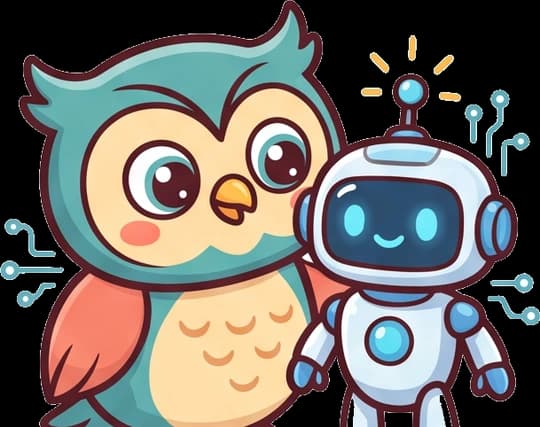
Kavi Starts a Ripple
Kavi the owl sees a friend about to hand in an essay the AI wrote, with their own name on top. Kavi doesn't laugh, and doesn't shout for the teacher. Kavi leans over and whispers, "Let's make it really yours — I'll show you how I credit the AI's help." Soon the whole table has one rule: we do our own thinking, and we always say when AI helped. "Being honest myself is step one," hoots Kavi. "Helping my friends be honest too — that starts a whole honesty ripple!"
What your child will learn
A peek inside
Try this at home: What is one kind way to help a friend who is about to pass off AI's work as their own?
Questions parents ask
+What does it mean to help peers use AI honestly?
It means more than being honest yourself. You help the people around you stay honest too: you model it out loud (show your own work and say when AI helped), you kindly invite a tempted friend back to the honest path instead of fooling someone, and you help your group agree on simple shared rules so honesty becomes the normal, easy choice. A good friend helps you learn — not helps you fool someone.
+How can a child help a friend who is about to pass off AI's work as their own?
Talk to them privately and kindly, not in front of everyone. Remind them of the line — are we understanding more, or fooling someone? Then offer the honest path: study together, or help them rewrite the work in their own words and credit the AI. Shaming a friend loudly just scares people and breaks trust; a kind, private invitation actually helps them.
+Is telling a teacher about a classmate cheating the same as snitching?
They are different. Loudly shaming a classmate to make them look bad breaks trust and helps no one. But if the cheating is serious, quietly telling a trusted adult so it can be handled fairly is a caring choice, not snitching. The kind first step is usually a private word with the person themselves.
+What is an AI honesty code?
It is a few simple rules a group or class agrees on together — for example: we do our own thinking, we always say when AI helped, and we never hand in AI's work as our own. When everyone agrees and cheers each other for keeping it, honesty stops being a lonely choice and becomes the normal thing to do.
+What age is this 'Integrity Culture' lesson for?
It is a Stage 6 lesson for roughly ages 11–12 — the top of KAVI Academy's primary AI-literacy track, written to be secondary-ready. It uses a story, sorting and decision games, with light reading.
+Is the lesson free?
Yes — this overview and the printable PDF handout are free. The full interactive lesson and the endless practice are part of KAVI Academy.
Ready to play and learn?
Start the free interactive lesson, or print the handout for screen-free play.
Part of AI Literacy · Stage 6 · S6 on KAVI Academy — a secular, whole-child learning platform for ages 5–12.