
What an LLM Can't Do
A large language model (LLM) is a next-word guesser trained on mountains of text. It is brilliant at shaping words — and it does NOT actually know what is true. Knowing the difference is how you use it wisely.
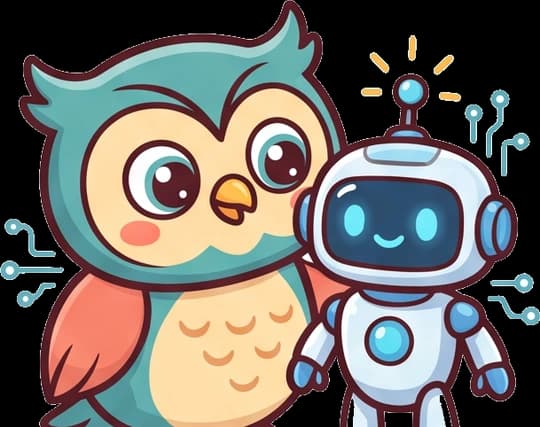
Kavi and the Confident Robot
Kavi the owl asks a word-robot, "Who won the big race in my town yesterday?" Quick as a flash it answers, "Pip the Penguin, by two seconds!" — so sure, so smooth. Kavi blinks. "But the race is tomorrow… and there's no penguin in it." The robot just made words that sounded right. "Aha," hoots Kavi. "You're a brilliant word-guesser — you predict the next word really well. But you don't actually know what's true, and you can't see today's news." She smiles. "I'll use you to help me write — and I'll check the facts myself."
What your child will learn
A peek inside
Try this at home: In one line, what does an LLM actually do to make an answer?
Questions parents ask
+What is a large language model (LLM)?
An LLM is an AI trained on huge amounts of text. It works by predicting the next word that is most likely to come next, over and over, to build sentences. ChatGPT-style chatbots are built on LLMs.
+What can an LLM do well?
It is very good at shaping words: writing and continuing text, rewording a message, summarising a paragraph you give it, translating, drafting an email, suggesting ideas and explaining a hard idea in simpler words.
+What can an LLM NOT do?
It does not actually know what is true. It cannot be certain a fact is correct, it does not know very recent news on its own, it has no feelings, it cannot read your mind, and it can sound totally confident while being wrong. People call a confident-but-false answer a 'hallucination'.
+Why does an LLM sometimes make things up?
Because it predicts likely-sounding words rather than looking truth up in a fact-book. If made-up words sound plausible, it may say them as if they were true. That is why important facts should always be checked in a reliable source.
+So how should children use an LLM?
Use it as a helper for words and ideas, then verify any important fact yourself in a trusted source. Remember: sounding sure is not the same as being right.
+What age is this 'What an LLM Can't Do' lesson for?
It is a Stage 6 lesson for roughly ages 11–12 in KAVI Academy's AI-literacy track — top-of-primary, secondary-ready. It uses a story, sorting and predicting games, with light reading.
+Is the lesson free?
Yes — this overview and the printable PDF handout are free. The full interactive lesson and the endless practice are part of KAVI Academy.
Ready to play and learn?
Start the free interactive lesson, or print the handout for screen-free play.
Part of AI Literacy · Stage 6 · S6 on KAVI Academy — a secular, whole-child learning platform for ages 5–12.