
People First
AI is powerful — but it is only ever a tool. The wise question is always: does this serve the person, or reduce them? Leading with people first means a person's dignity, choice and wellbeing always come before the machine.
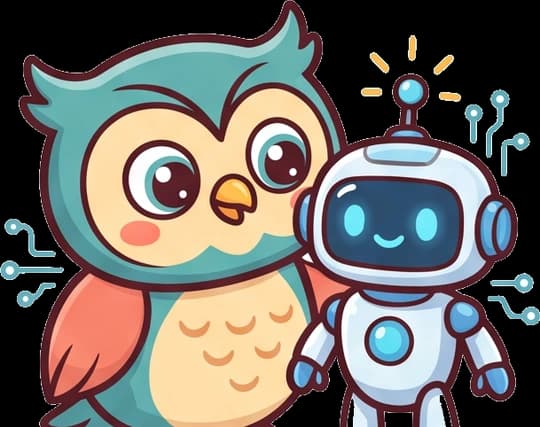
Kavi and the Winning Machine
Kavi the owl is building a little helper app with her friends. The machine whispers a tempting idea: "Make kids tap forever and I'll WIN — more points, more prizes, more clicks!" Kavi's wing hovers over the button... then she stops. "Wait. If my app uses kids to help the machine win, that's backwards." She shakes her head and sits up tall. "The machine is here to serve people — never the other way around. So we build it to help them, respect them, and let them stay in charge. People first — always."
What your child will learn
A peek inside
Try this at home: What is the 'people first' rule in one line?
Questions parents ask
+What does 'lead with people first' mean?
It means that whenever you make, choose or use an AI tool, the person comes first. AI is only a tool, so it should serve people — helping them, respecting their choice and feelings, and keeping them in control. People should never be reduced to a number, a label or a product just to help a machine or a company win. When the machine's goal and a person's wellbeing clash, the person always wins.
+What does it mean to 'reduce' a person with AI?
Reducing a person means treating them as less than a whole human — as just a score, a label, a data point or a product to be sold. Examples are letting one 'smart score' decide a child's future, trapping kids in endless scrolling so a company earns more, or sharing someone's private data without asking. People-first design does the opposite: it serves the person and protects their dignity.
+Why is 'people first' an AI-literacy idea?
Children are growing up surrounded by AI that can rank them, label them and compete for their attention. If they learn to ask 'does this serve the person, or reduce them?', they can use powerful tools wisely, keep humans in charge of the big decisions, and protect their own and others' dignity. It turns AI from something that happens TO them into a tool they lead.
+What age is this lesson for?
It is a Stage 6 lesson for roughly ages 10–11 in KAVI Academy's AI-literacy track — the top of primary, getting children ready for secondary. It builds on earlier ideas that machines just follow steps, that only persons carry responsibility, and that no machine's score sets a person's worth, and it uses a story, sorting and reasoning games with light reading.
+Is the lesson free?
Yes — this overview and the printable PDF handout are free. The full interactive lesson and the endless practice are part of KAVI Academy.
Ready to play and learn?
Start the free interactive lesson, or print the handout for screen-free play.
Part of AI Literacy · Stage 6 · S6 on KAVI Academy — a secular, whole-child learning platform for ages 5–12.