
Defend Dignity
A machine can take over a task — do a sum, copy a style, lift a box, read the news. But it can never replace a person. Every person is one of a kind, loved for who they are, and able to care and take responsibility in a way no machine can. Learning to say that clearly is how you defend human dignity in an AI world: no one is replaceable.
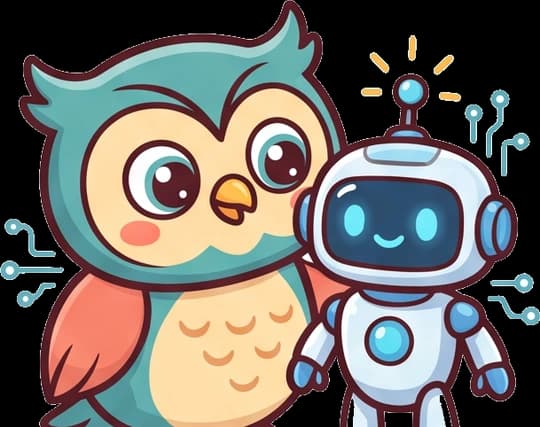
Kavi and the Big 'Replaced' Scare
Kavi the owl watches a video where a loud voice warns, "Soon AI will do everything — people won't be needed any more!" Her feathers droop. "So… could a machine just replace me?" Then she stops and tilts her head. "Wait. A machine can do a task — a sum, a drawing, lifting a box. But it can't be my friend, it can't love my family, it can't be the only me there is." She sits up tall. "A tool can take over a task. It can never replace a person. No one is replaceable — and I can say exactly why."
What your child will learn
A peek inside
Try this at home: Can a machine replace a person?
Questions parents ask
+What does 'no person is replaceable' mean when we talk about AI?
It means a machine can take over a task — a sum, a translation, a drawing style, even some of a job's work — but it can never replace the person. A person is one of a kind, loved for who they are, part of real relationships, and able to care and carry responsibility in ways a machine cannot. A tool can do a task; it can never be you.
+If a machine can do someone's job faster, does that make the person replaceable?
No. The machine took over a task, not the person. A person's worth was never only the task they did — they are still someone who matters, who is loved and who can learn something new. Losing a task does not make a person worth less or able to be swapped out.
+Why is 'no one is replaceable' an AI-literacy idea?
Children hear scary claims like 'AI will replace everyone.' If they believe a person is just the sum of tasks a machine can copy, they can start to feel worthless. Learning to tell a task apart from a person — and to defend that every person is unique and irreplaceable — keeps children confident and helps them use AI tools as helpers, not as something to measure their worth against.
+What age is this lesson for?
It is a Stage 6 lesson for roughly ages 10–11 in KAVI Academy's AI-literacy track — the top of primary, getting children secondary-ready. It builds on earlier ideas that machines are made things that follow steps, that only persons carry responsibility, and that no machine's score sets your worth.
+Is the lesson free?
Yes — this overview and the printable PDF handout are free. The full interactive lesson and the endless practice are part of KAVI Academy.
Ready to play and learn?
Start the free interactive lesson, or print the handout for screen-free play.
Part of AI Literacy · Stage 6 · S6 on KAVI Academy — a secular, whole-child learning platform for ages 5–12.