
Resist Over-Trust
A smooth, confident AI answer can still be wrong. The smoother it sounds, the more carefully you check the facts before you trust them.
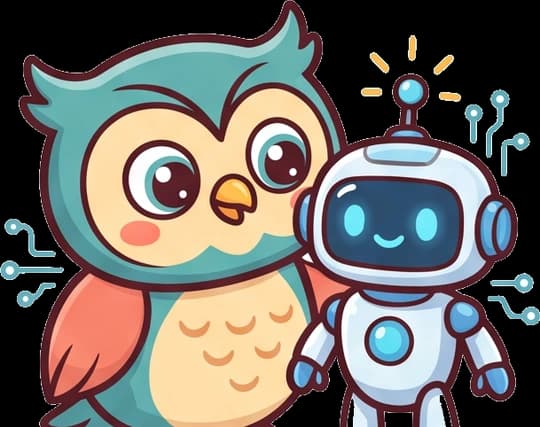
Kavi and the Silver-Tongued Answer
Kavi the owl asks an AI a question and gets back a dazzling answer — smooth sentences, a confident voice, big clever words, even a named source. "Wow," hoots Kavi, almost believing every word. Then Kavi stops: one of its 'facts' is something Kavi knows is wrong. "Fluent isn't the same as true," says Kavi. "The smoother an answer sounds, the more I remember to check the facts — not just trust the voice."
What your child will learn
A peek inside
Try this at home: What does it mean to 'over-trust' a fluent AI answer?
Questions parents ask
+What does it mean to over-trust a fluent AI answer?
It means believing an AI reply just because it SOUNDS good — smooth, confident, detailed, with perfect grammar — instead of checking whether it is actually true. Fluency is about style; it is not proof. A false fact can sound just as smooth and sure as a true one, so a polished answer deserves a check, not blind trust.
+Why can an AI sound so confident and still be wrong?
An AI builds answers by predicting likely-sounding words, not by knowing the truth. So it can produce a fluent, certain-sounding sentence whether the fact inside it is right or wrong — it can even invent a real-looking source or statistic. Sometimes a confident, made-up answer is called a 'hallucination'. That is why how sure it sounds tells you almost nothing about whether it is true.
+How can a child resist over-trusting an answer?
Treat a confident answer as a first draft you still need to verify. When a fact matters, cross-check it against a reliable, independent source — a trusted book, a reputable site, or a real expert. If the AI names a source, confirm it actually exists. And remember the rule: the smoother and surer an answer sounds, the more carefully you check the facts.
+Does this mean kids should distrust everything AI says?
No — the goal is healthy checking, not fear. When nothing factual is at stake, like a fun idea for a made-up story, there is no fact to verify. The skill is noticing WHEN an answer makes a real factual claim — a date, a number, a source, advice about health or safety — and checking those before relying on them.
+What age is this 'Resist Over-Trust' lesson for?
It is a Stage 6 lesson for roughly ages 11–12 — the top of KAVI Academy's primary AI-literacy track, written to be secondary-ready. It uses a story, compare-and-sort games, and decision practice with light reading.
Ready to play and learn?
Start the free interactive lesson, or print the handout for screen-free play.
Part of AI Literacy · Stage 6 · S6 on KAVI Academy — a secular, whole-child learning platform for ages 5–12.