
Brief and Verify
An AI helper is like a fast new teammate: brief it clearly so it knows exactly what you want — then always verify its work, because it can sound sure and still be wrong. You stay in charge.
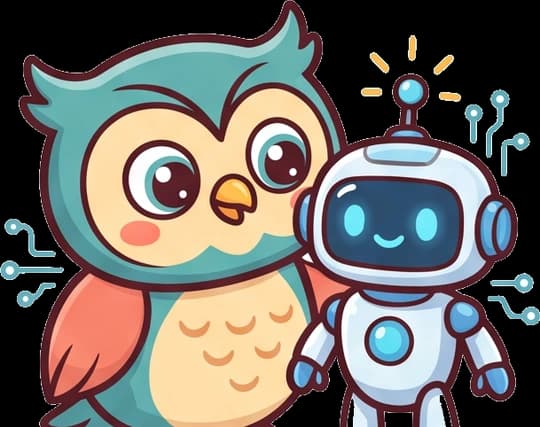
Kavi's AI Teammate
Kavi the owl has a big job — making a quiz for the whole club. "I'll treat the AI like a new teammate," she hoots, and writes a clear brief: the topic, how many questions, and the right level. The AI works fast! But Kavi doesn't just trust it — she verifies every answer against what she knows. "This one's wrong!" she spots, and fixes it before anyone sees. "Brief it well, then always check its work," she grins. "That's how you stay the boss."
What your child will learn
A peek inside
Try this at home: What does it mean to 'brief' an AI helper?
Questions parents ask
+What does it mean to 'brief' an AI helper?
It means giving the AI clear, specific instructions, the way you would brief a new teammate: say the goal (what you want), how long it should be, the style or tone, who it is for, and any rules (what to avoid, what must be included). A vague prompt like 'write a story' gets a vague result; a clear brief like 'write a funny 10-line story for a 6-year-old' gets useful work.
+Why do you have to verify an AI's work?
Because an AI can sound completely confident and still be wrong, or even make things up — including inventing sources that look real. Verifying means checking: are the facts true? Did it do what you asked? Is it complete? You check the facts against a trusted source, test any code yourself, and fix mistakes before you use the work. Sounding sure is not proof.
+If the AI helped, whose work is it?
Yours. An AI is a helper, not the author. You stay in charge: you brief it, you verify it, you fix its mistakes, and you own the final result. A good rule is to treat the AI like a fast teammate — it helps you do the job, but you are still the one responsible for whether it is right.
+What age is this 'Brief and Verify' lesson for?
It is a Stage 6 lesson for roughly ages 11–12 — the top of primary and secondary-ready — part of KAVI Academy's AI-literacy track. It uses a story, sorting, and decision games, with reading.
+Is the lesson free?
Yes — this overview and the printable PDF handout are free. The full interactive lesson and the endless practice are part of KAVI Academy.
Ready to play and learn?
Start the free interactive lesson, or print the handout for screen-free play.
Part of AI Literacy · Stage 6 · S6 on KAVI Academy — a secular, whole-child learning platform for ages 5–12.