
Know What I Don't
Be honest about what you know and what you don't — and don't over-trust yourself OR AI just because something sounds sure.
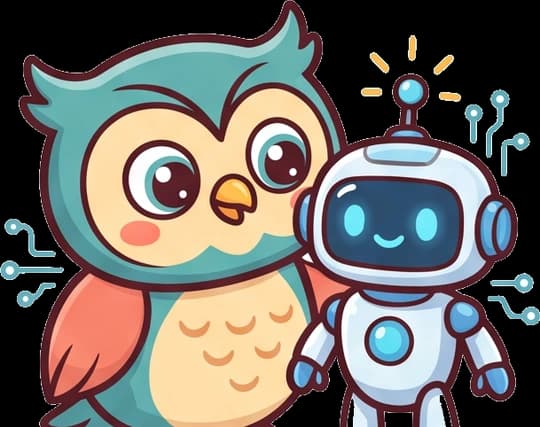
Kavi and the Foggy Peak
Kavi the owl climbs toward a peak wrapped in fog. "I know this trail up to the ridge," she hoots, "but past the fog? I'm honestly not sure." A loud parrot squawks, "The AI map says it's safe — it sounded SO certain!" Kavi smiles. "Sounding sure isn't the same as being right — a map and an owl can both be confidently wrong. The honest move is to say what I don't know, and check before I step." She taps each stone to test it before she trusts her weight to it.
What your child will learn
A peek inside
Try this at home: What one question helps you draw the line in this lesson?
Questions parents ask
+What does 'know what I don't' mean for a child?
It means being honest about the edge of your knowledge — the things you know, the things you don't, and the things you're only half-sure of. A child who 'knows what they don't' can say 'I'm not sure' out loud, admit which parts they haven't learned, and check a reliable source before claiming something is a fact.
+Why shouldn't children just trust a confident-sounding AI answer?
Because sounding sure is not the same as being right. AI can give a very confident, detailed answer that is still wrong — it can even make facts up. Confidence is not proof. The honest habit is to check important facts against a reliable source instead of believing something just because it sounds certain.
+Isn't saying 'I don't know' a sign of weakness?
No — it is a sign of an honest, careful thinker. Saying 'I don't know yet' tells the truth about your knowledge and lets you go and learn the real answer, instead of locking in a made-up one. Over-trusting yourself — bluffing, or refusing to ever admit a limit — is what actually leads you wrong.
+What age is this 'Know What I Don't' lesson for?
It is a Stage 6 lesson for roughly ages 11–12 — the top of KAVI Academy's primary AI-literacy track, with secondary-ready depth. It uses a story, sorting and decision games, and light reading.
+Is the lesson free?
Yes — this overview and the printable PDF handout are free. The full interactive lesson and the endless practice are part of KAVI Academy.
Ready to play and learn?
Start the free interactive lesson, or print the handout for screen-free play.
Part of AI Literacy · Stage 6 · S6 on KAVI Academy — a secular, whole-child learning platform for ages 5–12.