
Academic Integrity
AI can help you learn — or let you cheat. Keep your integrity: do the real thinking yourself, follow the task's rules, and always say how AI helped.
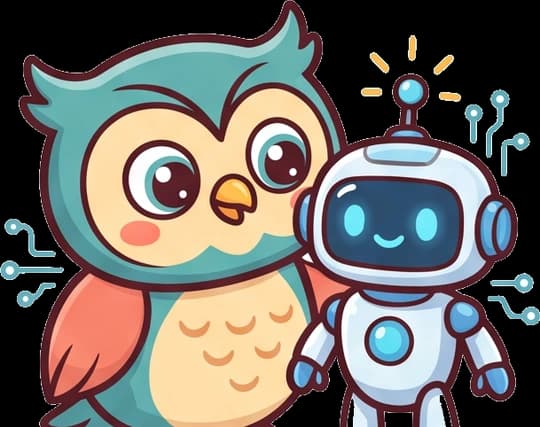
Kavi's Honest Report
Kavi the owl gets a big assignment — and a powerful AI that could do the whole thing. "I could let it write every word," Kavi hoots, "but then the work wouldn't be mine, and I'd have to hide that AI did it." So Kavi uses the AI to understand the tricky parts, writes the report in its own words, and adds a note: 'AI helped me understand the topic.' "That," says Kavi proudly, "is academic integrity: the thinking is mine, I followed the rules, and I'm honest about the help."
What your child will learn
A peek inside
Try this at home: What one test tells you if you kept academic integrity with AI?
Questions parents ask
+What does academic integrity with AI mean for a child?
It means the work you hand in is truly yours and you are honest about any help. Three rules: (1) do the real thinking and writing yourself, (2) follow the task's rules about AI — if a task bans AI, don't use it, and (3) declare how AI helped, like noting 'AI helped me understand the topic' or citing the tool. The quick test is: 'Did I do the thinking myself, and did I say how AI helped?'
+Is it always cheating to use AI for schoolwork?
No. Using AI to explain a hard idea, to check your grammar, to make practice questions, or to give feedback on your own draft is honest when the task allows it and you still do the real work — and when you say how AI helped. It becomes cheating when you hand in AI's work as your own, hide that AI helped, or use AI on a task that forbids it.
+Why do you have to declare that AI helped?
Because hiding AI's help misleads the reader about what you actually did yourself. Declaring it — a short note or a citation — keeps everyone honest, just like naming any book or website you used. Even small help, like AI suggesting a title, is worth a quick note.
+Does editing AI's essay a little make it my own work?
No. Changing a few words of an AI essay leaves the ideas and most of the writing as AI's, so it is not truly your work. To keep integrity, do the thinking and writing yourself and use AI only for allowed help that you then declare.
+What age is this Academic Integrity lesson for?
It is a Stage 6 lesson for roughly ages 11–12 — the top of primary and getting ready for secondary — in KAVI Academy's AI-literacy track. It uses a story, sorting and decision games, and short reading.
+Is the lesson free?
Yes — this overview and the printable PDF handout are free. The full interactive lesson and the endless practice are part of KAVI Academy.
Ready to play and learn?
Start the free interactive lesson, or print the handout for screen-free play.
Part of AI Literacy · Stage 6 · S6 on KAVI Academy — a secular, whole-child learning platform for ages 5–12.