
Human or Machine?
Some jobs truly need a real person — for caring, feelings, trust and fairness. A machine is fine for small, mechanical jobs. When a task needs a human, choose the human.
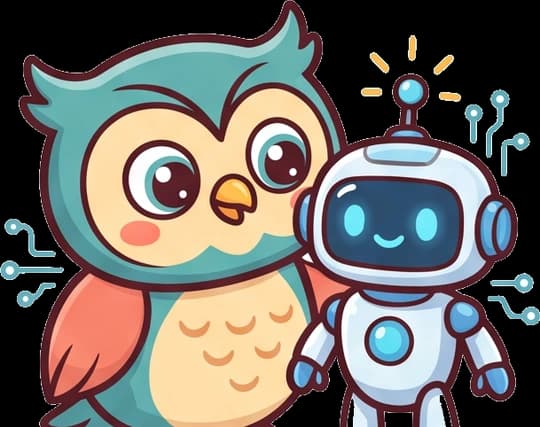
Kavi and the Cheer-Up App
Kavi the owl's friend Pim is crying in the corner — her drawing got torn. A new Cheer-Up App pops up on the tablet: "Tap here and I'll tell her a joke!" Kavi pauses. "A machine can print a joke... but it can't really care." She puts the tablet down, sits beside Pim, and helps tape the drawing. "Comforting a friend needs a real person," Kavi says. "When a task needs a human — I choose the human."
What your child will learn
A peek inside
Try this at home: Name one sign that a task needs a human, not a machine.
Questions parents ask
+When does a task need a human instead of a machine?
A task needs a human when it needs caring or feelings (comforting a crying friend, cheering someone up), trust (a real apology, keeping a promise), a fair and important choice, or someone to be responsible for what happens. A machine can copy words, but it cannot truly care, mean it, or be responsible — so for those jobs you choose a person.
+What jobs is a machine fine for?
Small, mechanical jobs with no feelings and nothing important at stake — adding up a long list of numbers, sorting photos by date, checking spelling, setting a timer, shuffling songs. If a job needs care, trust, fairness or responsibility, choose a human instead.
+Can't a machine comfort someone or say sorry for me?
A machine can print the words 'I'm sorry' or 'I'm here for you', but it does not feel them and cannot mean them. Comfort, a true apology and real friendship are between people. When a task is like that, the kind, honest thing is to choose a human — to go yourself, or ask a trusted person.
+What age is this 'Human or Machine?' lesson for?
It is a Stage 5 lesson for roughly ages 10–11 in KAVI Academy's AI-literacy track. It builds on earlier ideas that machines only follow steps, and asks the learner to judge which tasks need a person and choose the human. It uses a story, sorting, prediction and reasoning games with light reading.
+Is the lesson free?
Yes — this overview and the printable PDF handout are free. The full interactive lesson and the endless practice are part of KAVI Academy.
Ready to play and learn?
Start the free interactive lesson, or print the handout for screen-free play.
Part of AI Literacy · Stage 5 · S5 on KAVI Academy — a secular, whole-child learning platform for ages 5–12.