
Don't Fake Sources
A source is where a fact comes from — and it only counts if it's real and you can check it.
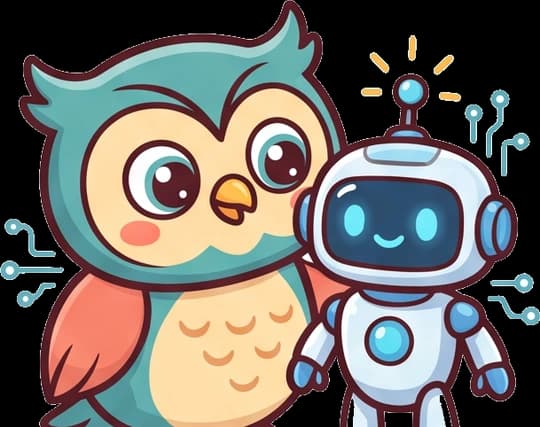
Kavi Won't Make It Up
Kavi the owl is finishing her report on sea turtles. "I need to say where I learned this," she hoots. Her AI helper gives her a neat book title and a web link. But when Kavi opens the link — nothing! And the book? It isn't in the library at all. "That source isn't real," she gasps. She could just paste it in and hope… but that would be faking a source. Instead Kavi finds a real book she actually read and names that. "A source only counts if it's real and I can check it," says Kavi. "I won't invent one!"
What your child will learn
A peek inside
Try this at home: What is a 'source'?
Questions parents ask
+What does it mean to fake a source?
A source is where a fact comes from — a real book, website or person. Faking a source means making one up: inventing a book title, an author, or a link that doesn't really exist, so your work looks well-researched when it isn't. It's dishonest, and anyone who tries to check it will find nothing there.
+Why do AI tools sometimes invent fake sources?
An AI helper writes what usually sounds right, so it can produce a book title, author or web link that looks real but doesn't exist — this is called a made-up or 'hallucinated' source. That's why you never copy a source from AI without checking it: open the link, find the book, make sure the source is really there before you use it.
+How can a child check that a source is real?
Try to find it yourself. Open the link and see if the page is really there and says what you claimed. Look up the book or author in a library or catalogue. Ask a grown-up to help you check. If you can't find the source anywhere, don't use it — a source you can't find is not a source you can trust.
+What age is this 'Don't Fake Sources' lesson for?
It is a Stage 4 lesson for roughly ages 9–10 — part of KAVI Academy's AI-literacy track. It uses a story, sorting and decision games with reading.
+Is the lesson free?
Yes — this overview and the printable PDF handout are free. The full interactive lesson and the endless practice are part of KAVI Academy.
Ready to play and learn?
Start the free interactive lesson, or print the handout for screen-free play.
Part of AI Literacy · Stage 4 · S4 on KAVI Academy — a secular, whole-child learning platform for ages 5–12.