
No Free Will
A machine can't choose good or evil — it only follows the steps people gave it. You can. Having a free will means the choice is really yours.
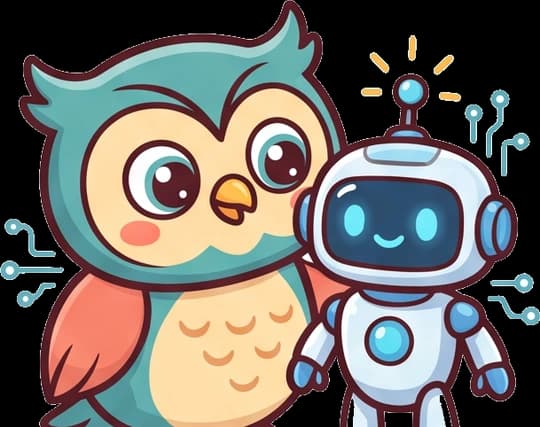
Kavi and the Robot That Couldn't Choose
Kavi the owl asks a toy robot, "Will you be kind today, or unkind?" The robot just rolls forward — it has no answer. "You can't choose," says Kavi. "You only do the steps people gave you. You have no free will." Then her friend shares the last cookie. "That was a choice," smiles Kavi. "A machine can't choose good or evil — but you can. Your kind choice was really yours."
What your child will learn
A peek inside
Try this at home: Does a machine have free will?
Questions parents ask
+Does a machine have free will?
No. A machine has no free will. It only follows the steps people gave it, so it can't choose good or evil — it just does what it was built to do. A person has a free will: the choice to be kind or unkind is really their own.
+Can a robot choose to be good or bad?
No. A robot can't choose anything. When a robot does something helpful or something harmful, it is only following its steps — the choice was made by the people who built or used it. Only a person can really choose good or evil.
+Why does it matter that only people have free will?
Because children will use robots, apps and chatbots that seem to 'decide'. It helps them to know a machine never truly chooses — so it can't be good or bad on its own, and a person is always behind what it does. It also reminds them their own good choices are really theirs.
+What age is this lesson for?
It is a Stage 4 lesson for roughly ages 8–9 in KAVI Academy's AI-literacy track. It builds on earlier ideas that a machine is a made thing that just follows steps and has no conscience, and uses a story, sorting and reasoning games with light reading.
+Is the lesson free?
Yes — this overview and the printable PDF handout are free. The full interactive lesson and the endless practice are part of KAVI Academy.
Ready to play and learn?
Start the free interactive lesson, or print the handout for screen-free play.
Part of AI Literacy · Stage 4 · S4 on KAVI Academy — a secular, whole-child learning platform for ages 5–12.