
Where Did It Come From?
A good answer can tell you where it came from. Learn to ask — and check!
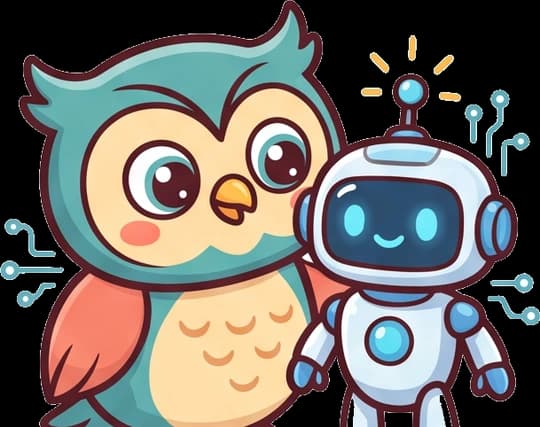
Kavi Asks Where
Kavi the owl asks a helper, "Do owls really turn their heads far around?" The helper answers, "Yes!" Kavi tilts her head. "But where did that come from?" The helper points to a bird book 📖: "It's on page 9." Kavi checks — and it's true! "A good answer can tell you where it came from," she hoots. "Always ask — then you can check!"
What your child will learn
A peek inside
Try this at home: A helper gives you a fact. What is a good question to ask before you trust it?
Questions parents ask
+Why should children ask where an answer came from?
Because an answer is only as good as its source. When a child asks 'where did that come from?', they learn to look for a trusted book, website or grown-up behind the fact — instead of believing something just because a helper said it with confidence.
+What is a good question to check an answer?
'Where did that come from?' or 'How do you know?' A good answer can name a source you can check — a book, a trusted website, a teacher. An answer with no source at all is a sign to pause and check for yourself.
+What age is this 'Where Did It Come From?' lesson for?
It is a Stage 3 (Foundation II) lesson for roughly ages 8–9 in KAVI Academy's AI-literacy track. It builds on checking answers for truth and adds the habit of asking for a source, with very little reading.
+Why teach provenance to young children?
AI tools and the internet give answers without always saying where they came from. A child who asks for the source early learns to tell a checkable fact from a confident guess — the foundation of using AI honestly and safely.
+Is the lesson free?
Yes — this overview and the printable PDF handout are free. The full interactive lesson and the endless practice are part of KAVI Academy.
Ready to play and learn?
Start the free interactive lesson, or print the handout for screen-free play.
Part of AI Literacy · Stage 3 · S3 on KAVI Academy — a secular, whole-child learning platform for ages 5–12.