
Compare Answers
You answered. The machine answered. Now compare — which one is right?
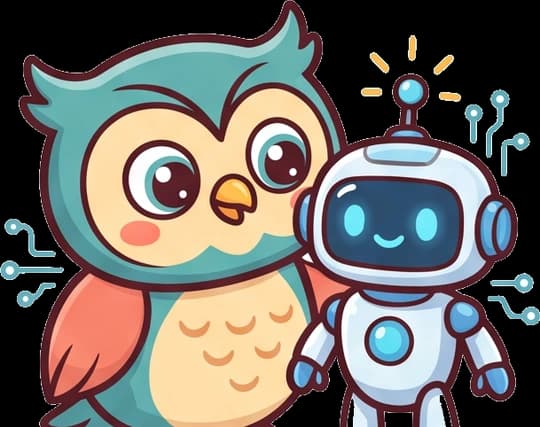
Kavi Checks the Machine
Kavi the owl asks her machine: "How many legs does a spider have?" The machine answers fast: "Six!" Kavi tilts her head. "Hmm — I counted eight on a real spider." She checks a picture book. Eight! "The machine answered quickly," Kavi hoots, "but I was right. Always compare your answer with the machine's — and check which one is true!"
What your child will learn
A peek inside
Try this at home: You worked out an answer, and the machine gave a different one. What should you do?
Questions parents ask
+Should children just trust what an AI answers?
No. A machine can answer fast, but it can also be wrong. The smart habit is to compare the machine's answer with what you already know is true, and with a trusted source. If they agree, you can trust it; if they differ, find which one matches the real world.
+How do you compare your answer with a machine's answer?
Work out your own answer first, then look at the machine's. Check both against what is really true. The one that matches the real world is the right one — sometimes that is yours, sometimes it is the machine's.
+What age is this 'Compare Answers' lesson for?
It is a Stage 3 (Foundation II) lesson for roughly ages 7–8 in KAVI Academy's AI-literacy track, built around judging simple true/false claims so very little reading is needed.
+Why teach children to check AI answers?
Because AI tools often sound confident even when they are wrong. A child who has practised comparing answers learns that fast is not the same as correct, and keeps the power to judge for themselves.
+Is the lesson free?
Yes — this overview and the printable PDF handout are free. The full interactive lesson and the endless practice are part of KAVI Academy.
Ready to play and learn?
Start the free interactive lesson, or print the handout for screen-free play.
Part of AI Literacy · Stage 3 · S3 on KAVI Academy — a secular, whole-child learning platform for ages 5–12.