
Learns from Data
A computer learns from data — lots of examples — but if the data is bad or missing, it can be wrong!
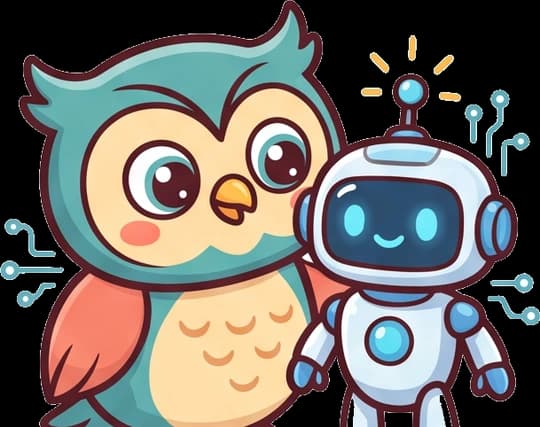
Kavi's Guessing Machine
Kavi the owl feeds her machine a big pile of photos: "🐱🐱🐱 these are all cats." The machine studies the data and learns what cats look like. Then Kavi shows it a brand-new photo — a 🐶 dog! The machine beeps: "CAT!" Kavi giggles. "Oops — it only ever saw cats, so it learned a wrong pattern. Let's feed it some dog photos too!"
What your child will learn
A peek inside
Try this at home: What does a computer learn from?
Questions parents ask
+How does a computer learn from data?
It looks at lots of examples — called data — and finds a pattern. After seeing many cats labelled 'cat', it learns what cats tend to look like, so it can guess 'cat' on a brand-new picture. It learns from the data, not from a rule someone typed in.
+Why can a computer be wrong?
Because it only knows what its data showed it. If the data was too small, left things out, or had mistakes, the computer learns the wrong pattern and guesses wrong on new things. A computer that only ever saw cats may call a dog a 'cat'.
+What does 'bad data' mean for AI?
Bad data is data that is too few, one-sided, or has errors. A computer that learns from bad data makes bad guesses — people say 'garbage in, garbage out'. Good, varied, correct data helps a computer be right more often.
+What age is this 'Learns from Data' lesson for?
It is a Stage 3 lesson for roughly ages 7–8 in KAVI Academy's AI-literacy track. It uses a story, a learning loop, and guessing games, with light reading.
+Is the lesson free?
Yes — this overview and the printable PDF handout are free. The full interactive lesson and the endless practice are part of KAVI Academy.
Ready to play and learn?
Start the free interactive lesson, or print the handout for screen-free play.
Part of AI Literacy · Stage 3 · S3 on KAVI Academy — a secular, whole-child learning platform for ages 5–12.