
Fair Guesses
One-sided examples make one-sided guesses — a fair guess starts in the data.
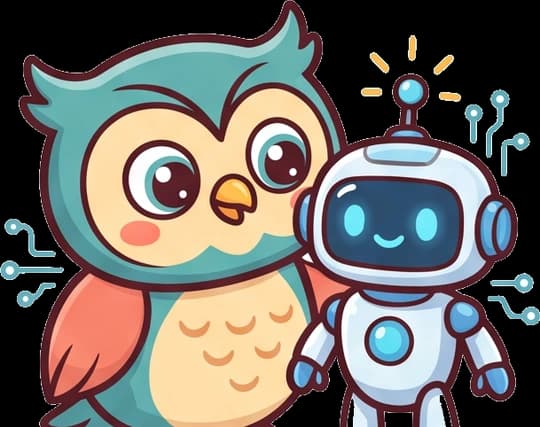
Kavi's Door Robot
Kavi the owl builds a robot that guesses who is at the door. But she only ever showed it tall grown-ups 🧑! When her little cousin 🧒 knocks, the robot beeps: "Nobody there." "Oh no," Kavi hoots. "My examples were all one kind — so my robot's guess left kids out. A fair guess needs fair data!"
What your child will learn
A peek inside
Try this at home: A robot learned 'dog' from only big brown dogs. Name a dog it might guess WRONG.
Questions parents ask
+Why does one-sided data make AI unfair?
A machine copies the examples it was trained on. If the examples are one-sided — only one kind of face, voice or thing — the machine only learns that one kind, so it guesses wrong for everything it never saw. The guess can only be as fair as the data behind it.
+Can you give a simple example of an unfair guess?
A voice helper trained only on grown-up voices may not understand a child, because it never heard a child's voice. The fix is to add the kinds that were left out — fairness starts in the data.
+What age is this 'Fair Guesses' lesson for?
It is a Stage 3 (Foundation II) lesson for roughly ages 8–9 in KAVI Academy's AI-literacy track. It builds on the earlier 'Fair Examples' lesson by tracing one-sided data to the exact unfair guess it causes.
+How is this different from the Stage 2 fairness lesson?
Stage 2 shows that fair examples make fairer guesses. Stage 3 reasons the other way: given one-sided examples, children predict WHO or WHAT the machine will leave out, and name the fair fix.
+Is the lesson free?
Yes — this overview and the printable PDF handout are free. The full interactive lesson and the endless practice are part of KAVI Academy.
Ready to play and learn?
Start the free interactive lesson, or print the handout for screen-free play.
Part of AI Literacy · Stage 3 · S3 on KAVI Academy — a secular, whole-child learning platform for ages 5–12.