
It Guesses from Examples
A machine looks at lots of examples, then makes a guess — and sometimes it misses!
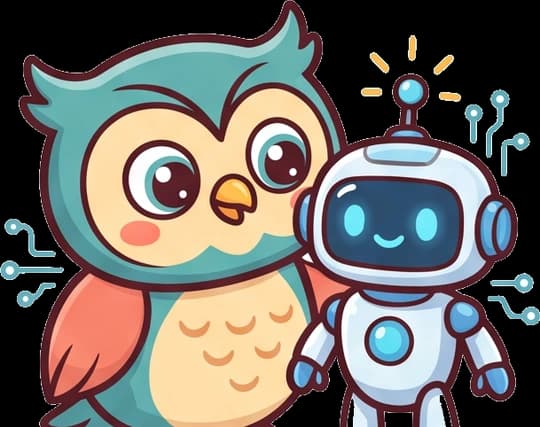
Kavi's Guessing Robot
Kavi the owl shows her robot lots of pictures. "Here are cats 🐱🐱🐱 — all cats!" she hoots. Now the robot sees a NEW picture and guesses: "Cat!" 🤖 "Yes!" cheers Kavi. But then a fluffy dog 🐶 appears and the robot guesses "Cat" again. "Oops — it missed!" laughs Kavi. "A machine only guesses from the examples it was shown. Let's see when it gets it right, and when it misses!"
What your child will learn
A peek inside
Try this at home: The robot saw many 🐱 cats. It sees a new 🐱 cat and guesses 'cat'. Good guess or miss?
Questions parents ask
+How does a machine guess from examples?
A machine is shown lots of examples first — like many pictures of cats all labelled 'cat'. It finds the pattern, then uses that pattern to guess what a new picture is. It is not thinking like a person; it is matching to the examples it was shown.
+Can a machine's guess be wrong?
Yes. If a new thing does not look like the examples it learned, the machine can miss — it may call a fluffy dog a 'cat' or miss something it never saw before. A machine can only guess from the examples it was given.
+Why teach kids that machines guess and can miss?
Knowing a machine guesses from examples — and can be wrong — helps children check answers instead of trusting a tool blindly. It is a key early idea in AI literacy.
+What age is this 'It Guesses from Examples' lesson for?
It is a Stage 2 lesson for roughly ages 6–7 in KAVI Academy's AI-literacy track. It is fully unplugged — a story and tap games, with very little reading.
+Is the lesson free?
Yes — this overview and the printable PDF handout are free. The full interactive lesson and endless practice are part of KAVI Academy.
Part of AI Literacy · Stage 2 · S2 on KAVI Academy — a secular, whole-child learning platform for ages 5–12.